
Don McLean, on his famous song American Pie, wrote: “But something touched me deep inside / The day the music died.”
Maybe that’s what happened to me, about ten years ago. I didn’t know we were going through a transformation. I was just three years out of high school, practically stepping into that part of life where we make all kinds of mistakes; the good, the bad, and the ugly. Not that any of it had an agenda of its own. It happened almost through pure accident and coincidence. Film and music have always been great markers for me, not so much for what they deliver, but for when they were delivered. Every scene, every note, can send me back the same way a familiar scent from an old bottle of cologne does. My playlists, like my taste in cologne, have changed drastically. But sometimes the shuffle algorithm throws back a song I added close to a decade ago, and I find myself wondering about the music, the time, and where it all changed.
Concerts, from what I recall, had more than modest crowds who understood the etiquette. There was an era in the twenty-tens when phones were rarely raised into the air; something I’m reminded of every time I come across old footage from a show around that period. It’s one of the more astonishing things to witness now.
The artist who has remained not only in rotation but in inspiration for all of this time is G-Eazy, legally Gerald Gillum. Born and raised in the Bay Area, I first came across his music in the summer of 2010. I was in tenth grade, maybe eleventh, and my friend Ziena, whom I’ve long since lost contact with, was a genuine internet worm when it came to music. She dug deep into the indie scene and recommended me a record almost every week. I was one of those kids who walked thirty minutes to school and back, since we didn’t have a car growing up. That time was more than enough to get through an album, and that’s how I was introduced to G-Eazy’s mixtape, The Endless Summer.
It was the first time I felt like being different was actually cool; and that’s not an easy thing to hold onto in high school. You either became a headliner in the hallway, a background character, or the weakest link. I found out the hard way that when you move between all crowds, you’re seen as an insider by none of them. By senior year, the same kids who used my head as target practice in bathrooms or launched paper snowballs at me were walking down the hall trying to get details on girls I knew on more than a face-and-name basis. It was an interesting stretch of years, especially at a school that was outside my original catchment area; but I’m getting carried away.
Being different. That was the marker with G’s early work. Infusing doo-wop with hip-hop wasn’t new, but it wasn’t often done with that level of craft. There was a particular pop-flow to it; easy enough to digest, but with enough edge to hold a crowd at a live show.
When G-Eazy was set to perform at The Fortune Sound Club in Vancouver on March 8, 2013, I pulled my friend Vince out of university and dragged him to the venue. We stood in the cold with the other concert-goers that evening; it was far from spring. Right next to us sat a white van with a California license plate and a U-Haul trailer attached. Every so often, someone from G’s team would come in and out retrieving equipment. That van was his tour bus, his roots, the beginning of something more to come.
While Vince hid in a corner booth trying to submit an essay before midnight, I was already telling him, “This guy is going to be really big in a few years. Just watch.” The crowd that night was modest; maybe a hundred people hugging the stage. The set design was simple: a giant neon G-Eazy sign, his drummer Blizzy, keyboardist and producer Christoph Andersson, and G himself in sunglasses and a leather jacket. He played an array of old and new material, promoting his upcoming debut album on RCA, These Things Happen. Songs like Tumblr Girls and Far Alone had everyone singing along. He played tracks from his tape Must Be Nice; music where he envisioned a life with the struggle behind him and something better just around the corner.
As he seemed to prophesy in his own work, success came; and in a big way. These Things Happen was met with positive reviews and went double platinum, as did his following record, When It’s Dark Out.
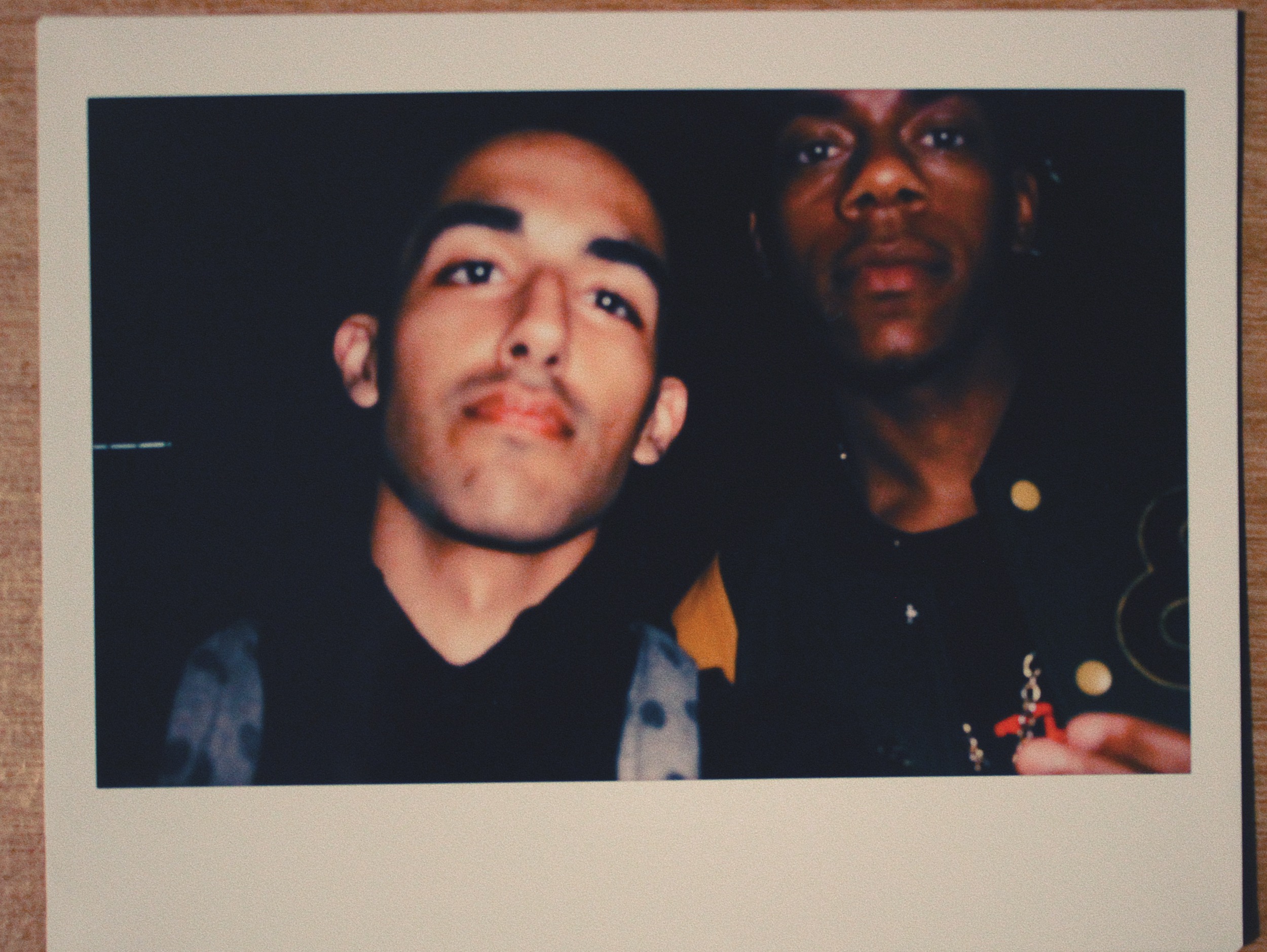
Three years after Fortune Sound Club, I saw him again at Pacific Coliseum, playing to close to 17,500 fans. Compare that to the 450-person capacity at Fortune that hadn’t even been sold out. The trajectory was something to study, and many fans did exactly that. I always sensed G had been tuned in to what was coming next; but I found myself wondering if it even mattered to him. Someone who had gone through so many transformations in sound, from the Big mixtape to The Outsider to charting original tracks; what did he see ahead?
With a VIP lanyard around my neck, I was escorted by his bodyguard from the meeting point and found several other fans already waiting with CDs, posters, and vinyls. One of the better perks of the pass: a haircut with his traveling barber, Kevin Kellett.
G-Eazy stands at 6’4. He and his friend and fellow rapper Marty Grimes moved through the room taking photo after photo, occasionally stopping for a real conversation with fans. I had done some digging on the Wayback Machine beforehand and found an old blog of his promoting the Big mixtape, with a header image pulled from Tom Hanks’ classic film Big; the piano dance scene. As a callback, I brought a Blu-ray copy and showed it to him.
“No way,” G-Eazy laughed, almost in disbelief. “Yo Marty, check this out.”
Marty walked over, same reaction: “Wow, this goes way back.”
I like to think it really took him back; to the early days of making records out of a bedroom closet. Now here he was, playing a sold-out show at the Coliseum, and I imagine somewhere in the back of his mind he was asking himself the same thing we all do: where does the time go, and where does it go from here?
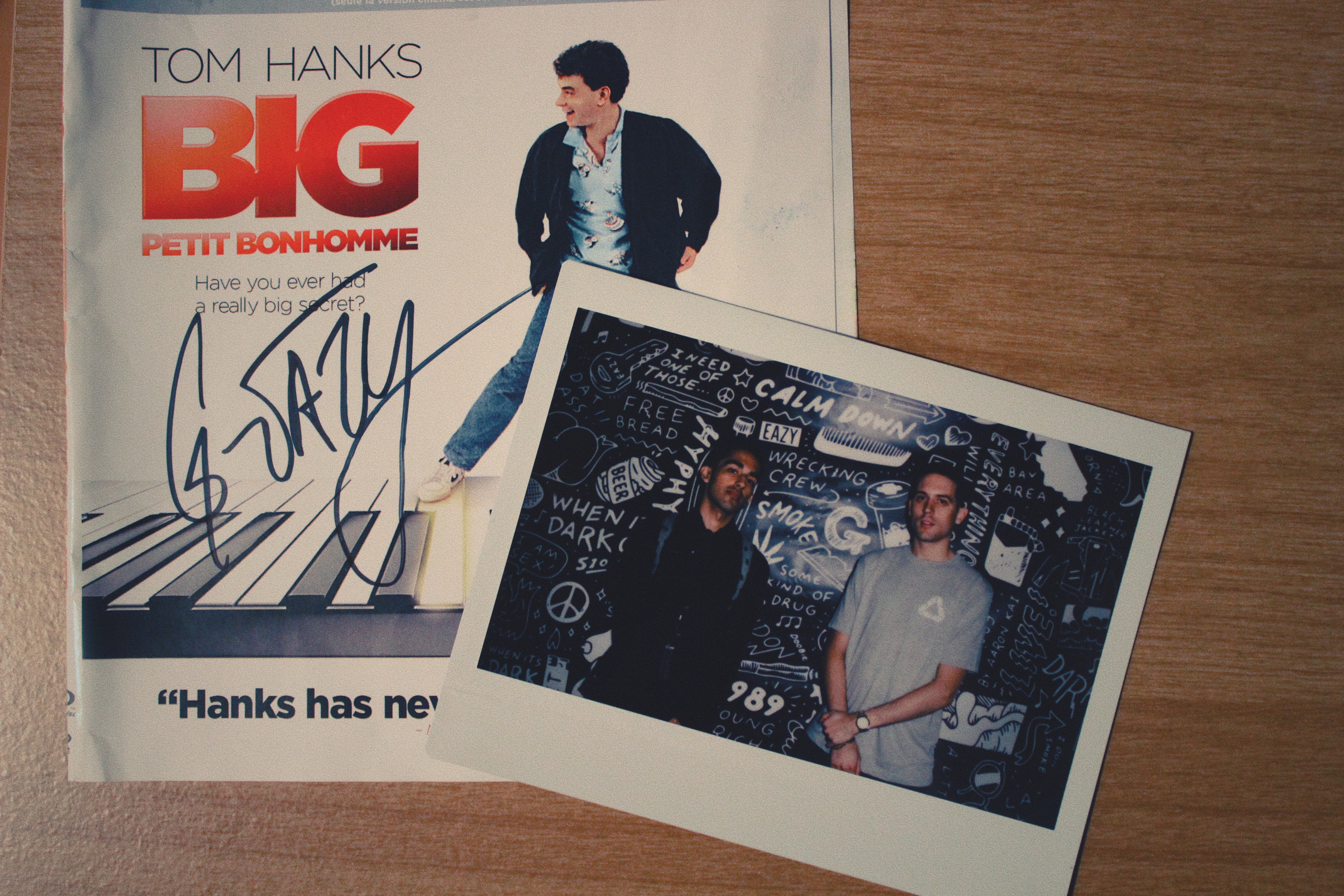
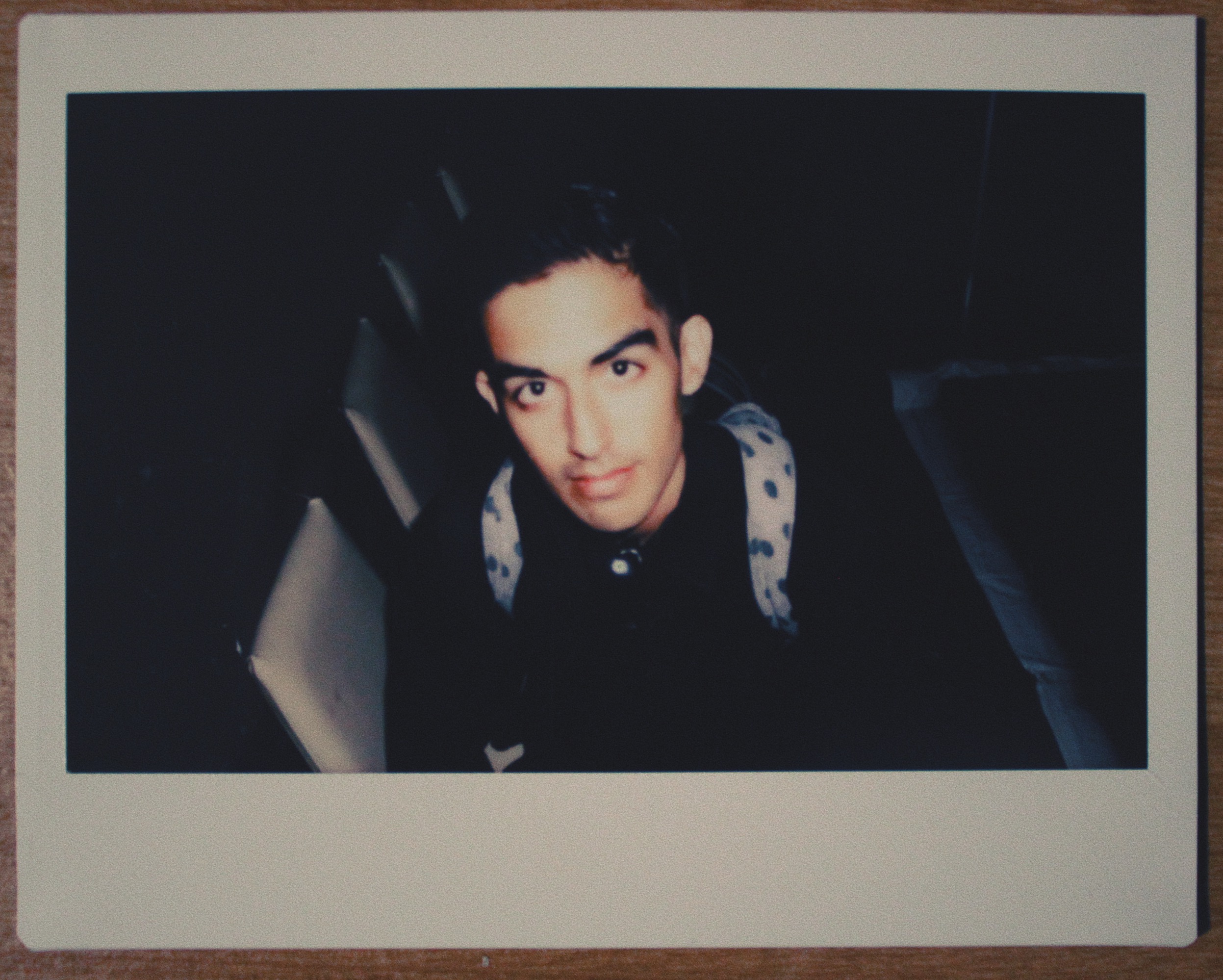
After saying my piece; gratitude for the work, the inspiration, the years; we exchanged a dap, took a Polaroid, and I was off to the barber chair, overdue for a cut that came perfectly included with the pass. Kevin Kellett has been a long-time friend and traveling barber for G, going back to the Endless Summer era. As he took out his clippers and got to work, I took the opportunity to talk to him about the man himself.
(A little background on Kevin: he’s a well-sought-after touring barber for artists, known by his handle @OGKCUTYOU on social media.)
Giovanni: So how did you and G-Eazy meet?
Kevin: I cut his hair once in New York, and then he came back and asked if I’d like to join him on tour. I said yeah, sure.
Giovanni: How long have you known him?
Kevin: Oh, it feels like forever. I remember when he was just starting out.
Giovanni: Do you think G ever wonders what’s coming next? He’s playing the Coliseum today; is he aiming for arenas and stadiums after this?
Kevin paused, choosing his words carefully.
Kevin: He doesn’t worry about that. To him, whether it’s a hundred people or a thousand showing up to see him play; that’s everything. Because there was a time nobody knew him at all, and he knows what that felt like.
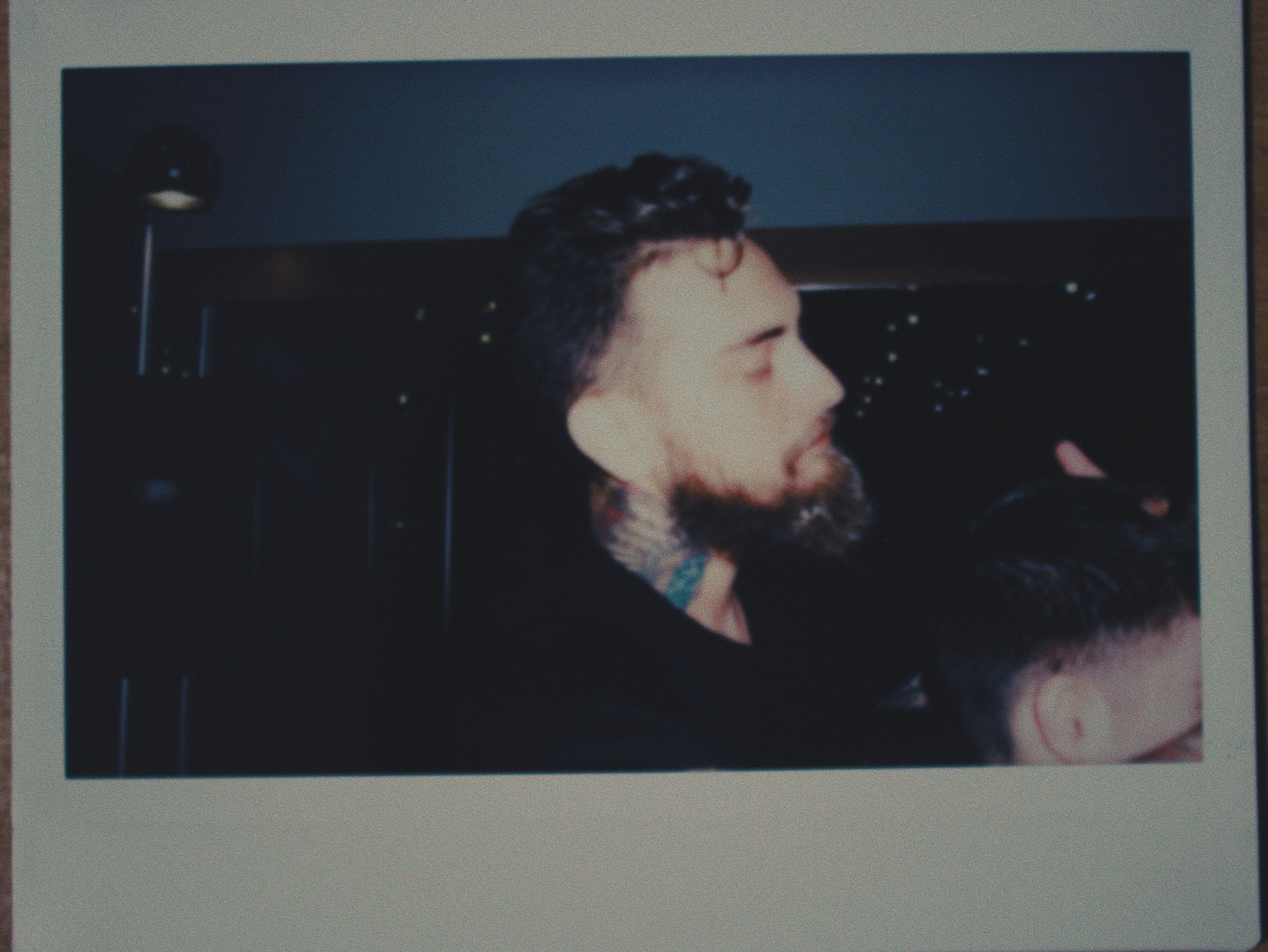
Long after that conversation. Long after the show. Long after the lights went down and everyone went home; time moved on. It did the very thing it always does: it didn’t wait. Not for him, not for me, not for anyone.
Four years later, he released These Things Happen Too. It didn’t chart the way its predecessor did, though it did reach Gold. That four-year stretch of quiet had listeners speculating; a break, a pivot toward production, maybe a full lean into acting after a few indie film roles. Nobody quite knew. These Things Happen Too, despite its ambitious title echoing the era that first took G to those heights, didn’t land with the same reception as the original.
He moved into EPs and features; Step Brothers with Carnage, Scary Nights, Moana with Jack Harlow. What had once been a steady release-and-tour rhythm became something more free-form, more unbothered. The EPs and singles found their audiences but didn’t reach number one. Then TikTok rediscovered Lady Killer and turned it into a trend, sending G back into the studio to ride the moment. A new version of the track landed; but again, it found its own quiet corner in his catalogue rather than the monumental reception of his earlier work.
Many of his older fans drifted from the newer releases, chasing the James Dean-era G; the one who layered classics over Endless Summer and made it feel timeless. When I saw him on the Endless Summer Tour in Mountain View alongside Logic, the outdoor venue was enormous, and the crowd matched the scale. It was clear that era was his strongest suit; the matte production, the timeless samples, everything hitting the right notes. A rumoured Endless Summer 2 tape circulated the blogs for years, but it never came.
His more recent releases, Freak Show and Helium, arrived without much reception at all. Both records had their tours, but turnout had shifted considerably. I caught one of his shows out in Southern California and found a crowd somewhere between a club and a ballroom. Standing there, I kept thinking about what Kevin had told me a decade ago; and it held up. G still put on a show, regardless of the ticket count. Maybe it disappoints the listeners who once saw him on a mountain at a peak moment and now feel the distance. But we can’t stay there. The whole point of an independent artist is to create their best work and keep walking forward with it. Critics will have their say, but people move on from critics the way they move on from everything else. An opinion isn’t timeless. It’s just a perspective.
Now, in 2026, G-Eazy is heading back out on tour with Logic; the Endless Summer 2 Tour. Promotion has been minimal, tickets aren’t sold out, but the audience is there. Fans who, despite every transformation he’s gone through, will show up time and again to prove it. When you consider his come-up; from his early twenties to now approaching his late thirties; this was someone who gave a generation of young internet artists a reason to keep going, keep creating, keep being different. We can’t expect him to resurrect what once was. This is the afterlife of that era. And after years of building it back from scratch, without the muscle of a major label behind him the way other mainstream artists have it, G’s hustle has been, undeniably, something else. His energy onstage is still in that same cinematic scope I witnessed the night he played Fortune Sound Club in 2013.
I look at who I was then and who I am now. In my garage there’s a guitar collecting dust and a MIDI keyboard I bought as an eighteenth birthday gift. I’m thirty-two. I pick up a camera more than I touch the keys these days. My favourite software is named after a painter, and I’ve come to understand that change is okay. I don’t have an audience that watched me graduate high school full of potential and promise; but my stories have always been timeless. No matter the weather, my creative scope has grown. Where I once believed I could stand on a stage, I now just hope to get home safely, put a meal on the table, and have somewhere to sleep. Whether my motion pictures find their Fortune Sound Club moment or not; that’s not why I started. It was for me. My identity. My life.
And I think that, in all of it, is where the music is reborn.
Photos by Giovanni Doray · © 2026 Hollywood Nosebleed. All rights reserved.